
Blog 8: Interview with a self-publisher

Updated: Aug 26, 2025
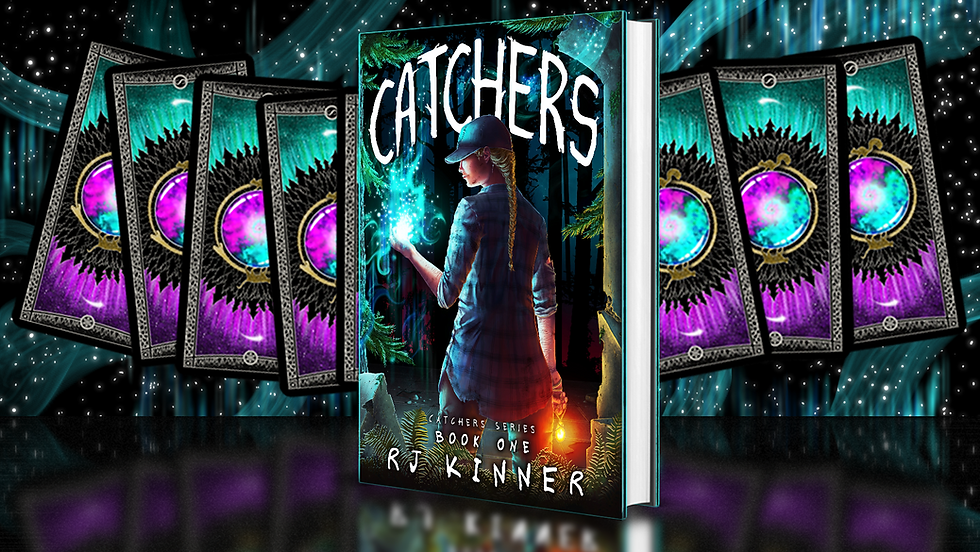
As you can tell from the title, I have a little something different for you all today. With the world of self-publishing becoming more and more popular, representing fifty to seventy percent of the market, I thought it prudent to inform you guys of your options when it comes to putting your babies out into the world.
Therefore, it’s quite fortuitous that one of my authors is about to go live with her self-published novel Catchers. Also, a talented artist, she has designed the cover and illustrated it throughout. So, who better to share her knowledge than the lovely lady herself, let me introduce you to Rachael J Kinner.
Hello there, Rachael, and thanks for being a part of my blog on self-publishing. Please tell the readers a little about yourself and your writing journey.
Hi! My name is Rachael, I write under the pen name RJ Kinner, and thank you for having me on your blog! I live on the West Coast of the U.S. at the moment and am focusing on writing, book illustration, and cover design. I love hiking, the indie video game community, and have developed an unhealthy relationship with chocolate chips.
I’m trying not to veer off topic now and question you about what type of chocolate you like. I must focus! You have to be excited waiting for Catchers to come out. Can you give the readers an idea of what it’s about?
I’m super excited! I wrote the original draft almost seven years ago and can’t wait to share it. Catchers is an adult contemporary fantasy/adventure novel. It follows nineteen-year-old Riley Stevens on her journey through the Pacific Northwest after she survives a suicide attempt and gains control of strange new powers. Along the way, she discovers hidden cultures, powerful enemies, and some unlikely friends that give her new purpose in life.
How long have you been self-publishing and what number of books have you published so far, and their titles of course?
Though I’ve been writing since I was eighteen (my god, is it already eight years now??) I’ve only started publishing since 2023. So far I’ve published two books and a novella (all in The Otherworlds Series), and as of March 27th 2025, Catchers!
Wow, that’s a lot of publishing in just a couple of years! I’m sure everyone would like to know why you choose to self-publish as opposed to going down the more traditional route.
I chose to self-publish for a number of reasons. One: I’m an illustrator as well as a writer. I felt I could bring the stories to life if I had control over the production of the book, which you don’t get in traditional publishing. Two: after trying for years to enter the very elitist world of trad publishing, I realized that trying to break into that industry was taking a toll on my mental health. So, I studied, practiced, and tried to figure it out on my own. Have I made mistakes on the way? Absolutely. But I’ve always felt that mistakes are the foundation for better things ahead. It’s not that I’m against traditional publishing, but for what I wanted to make, I felt this was the best path forward.
It’s great to hear you have found a way to publish that is right for you. Tell us, what do you feel are the advantages and disadvantages?
Oh, so many on both sides!
The biggest disadvantage, I think, is the lack of resources. With a publisher, all the services like cover design, editing, formatting, etc are provided for you. With self-publishing, you have to pay and/or find a way to do them yourself. This leads a lot of self-published books to come out very unprofessional and with a lot of mistakes. I’ve been fortunate enough to help raise some of the money through my amazing Kickstarter backers and do a lot of the design work myself, but not everyone is that lucky.
A big advantage is that you’re your own boss! And you get a much bigger chunk of your royalties. So, if you do your homework and have a confident list of books behind you, you can be very successful.
You mention being funded by Kickstarter. How does that work exactly and how do you go about setting it up?
Kickstarter is a crowdfunding platform that focuses on creative projects. You put a product, project, or idea onto the platform, and you run what’s called a campaign for thirty to sixty days. In that time, people have a chance to look over your project/idea and donate funds. In return, the creator provides them with the product and/or something collectable.
I actually began Kickstarter from something totally unrelated to my books: I illustrated a tarot and oracle deck. My first campaign for The Kinner Tarot went so well, that I thought it might be a good way to generate some buzz for my books as well! Books have a harder time in general on Kickstarter, but I’m super proud of what I’ve been able to accomplish with the last few campaigns!
Do the costs of self-publishing limit you to e-books or are you able to sell hard copies too?
Surprisingly, no. It’s generally no more expensive to do multiple formats than it is to just do an e-book. The only things you need to think about are use of your ISBNs (you can get them in a bundle from Bowker, but they are one of the more expensive aspects of self-publishing) and formatting. I use the Atticus software for formatting my books, so it’s very easy to make sure that the print version and the e-book versions are in good shape. But you can use any formatting program you’re comfortable with, just make sure to know the proper formatting technique. Do your research!
So, when you have finished writing your book, what’s next?
E D I T I N G. So. Much. God. Damn. Editing.
As my resources are limited, I try to self-edit as much as I can before sending it off to a professional. This is after years of experience and study, and even still there are mistakes I always miss, which is why the professional edits are SO important. The editing stages you go through can be broken up into categories (and it’s very important to do them in order!):
Developmental Edit: Focuses on big-picture elements of the story like plot, world-building, structure, etc. Alpha readers are extremely helpful during this stage if you can’t afford all these steps.
Line Edit: Focuses on writing style, voice, pacing, and tense structure. This is usually where I find as many Beta readers as I can!
Copy Edit: Deals with the nitty-gritty of grammar, typos, etc. I usually hire a professional editor because it can really help bring up the quality of the manuscript. Keep in mind, this is ONLY AFTER you’ve done the steps above. I like to think of this stage as the “final countdown,” even though there’s technically one more step. Which is…
Proofreading: I call this stage “all eyes on deck!” because it focuses on last-minute typos (yes, no matter how hard you try, there will always be typos. Accept it, fix it, and move on) and formatting quirks. This is the last step before it’s ready for publication, so, as many eyes as you can get on your book, the better!
We actually met through a free Beta reading Facebook group, didn’t we? Have you found these readers to be a helpful resource to help you refine your book and cut some of the costs down?
We did! Those groups are incredibly helpful for both networking and a critical eye. I will put a word of caution here though: writers (especially younger ones, or people just starting out) will always think their way/style is correct. Just remember that creative writing is subjective. What may be in your style may not jive with someone else's.
That being said, it’s best to get as many readers as you can. A general rule I go by is if you hear the same issues being raised by different parties, it’s a serious concern. If one person has a specific gripe, maybe take it with a pinch of salt. At the end of the day, you need to make something that you’re happy with, even if that means ripping your baby apart and putting it back together again.
That sounds painful! So, when you feel your book is reader-ready, what are the steps you need to take from there, up to the point where you are now, waiting for it to be put into print and purchased by the public?
For me, it means my carpal tunnel journey is about to begin anew, because I have a LOT of art to create. But it’s also the time to secure that kickass cover, get your proof copies of your book, reach out to ARC (Advanced Review Copy) readers, and set a launch date! Then take to the skies, social media, and wherever else you can think of to create hype. Tell your friends. Tell your friend’s friends. This is always the hardest part for me, as advertising is not my strong suit.
In general, here are the steps after editing is complete:
1- Writing and editing (getting beta readers usually falls under this category)
2- Cover and interior design
3- ARC readers
4- Kickstarter (this and the previous step can go on close to each other, as you want to give your ARC readers four to six weeks to read and review your book)
5- Advertise
6- Publish!
7- Keep advertising, and start a new project.
This last step is super important. Publishing isn’t the end of your book’s life, it’s only the beginning. Market and advertise your book regularly, otherwise sales won’t come. And having more books on the way not only helps your skills as a writer, but it’s great for your business! It takes time to build a solid book list, so work hard and be patient.
Thanks for the step-by-step guide and the additional post-publishing tips to get those all-important sales. Obviously, when you publish traditionally, a lot of the costs to get your book out onto the shelves are paid for by the publisher. Is it expensive to do it yourself?
It can be. You can cut costs by doing a lot of the work yourself, but be careful what you sacrifice. My advice would be to focus your budget on a kick-ass cover designer who knows the market trends, and an experienced editor. After that, marketing, which is a whole other can of worms.
What platforms do you use to advertise?
Amazon is great, and a good space to figure out the wild world of ads without feeling like you’re wasting tons of money. Otherwise, I use social media (Facebook, Instagram, TikTok, Bluesky, etc) as much as I can. Other things like local book signings, attending craft fairs, and networking are all fantastic! I’ve also got a monthly newsletter that I send out to keep people up to date on what I’m working on!
This process certainly keeps you busy. A lot of people I have spoken to are concerned that the money they put into publishing a book may not be recouped with the sales. Do you feel you sell enough books to make all this work worth the effort?
Right at this moment? No. Being a writer is a slow ride. And, inherently, a very inefficient one. The time it takes to create not only the story but the pieces that go along with it takes a long time to recoup. It’s a lot of work. I'm busy well into the night most days, and the weekend most weeks.
But, eventually, things grow. Your reader base grows and your abilities as a writer. Imposter syndrome is the most heinous bitch out there, and you need to be prepared to get comfortable with it until you are confident in yourself. When will you get there? No idea. I’ll let you know when I get there myself, one day.
I create things I’m proud of, which is all you can do in this world. Good things take time. Plant the good thing.
So this is a serious commitment that you need to keep on top of to help build your brand and get noticed! Have you got any advice or tips for others who would like to self-publish?
Failure is scary. But I think not trying is scarier. Any kind of publishing is tough, taking an obscene amount of time, blood, sweat, and tears. Sometimes you’re going to feel like you can’t compete with the rest of the world, so why bother?
But it’s important to remember that life is not a zero-sum game. You’re not unsuccessful just because others are doing “better” than you. If writing is what you love, then take the first step.
Absolutely, I'm sure others would agree it is so easy to compare yourself to others, rather than give yourself credit for what you have achieved. Thank you so much for popping in, Rachael, and, like you, I’m waiting excitedly for the 27th March (or March 27th as you Americans say) for Catchers to become available to buy!
Finally, would you be so kind as to share your website address for any other authors who are looking for a book cover designer, and the link to your book launch for those interested in checking it out?
Thank you for having me, Angie! I’m opening up for cover work in April, so keep an eye out!
My Website:
Catchers Book Launch:
Linktree with all my other stuff:


Comments